Trouble Comes In Bunches
NW

In 1879 WB Lockhard arrived in the Village. He was a lawyer and the agent in charge of registering all federal land sales.
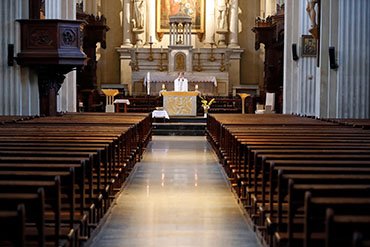
He assembled a small gathering of believers and they formed an Episcopal church. By 1880 there existed a small gathering of believers in the Village who formed the first Episcopal Church. Mr OB Batelle led the services.
The Church Forms
By 1883 the group was larger and better organized, and they chose RD Ellis to become their first minister. They called the ministry the All Saints Episcopal Church.
The next six years things grew bigger and better. The congregation held a yearly Rose Festival which was the social highlight of the season. It was very well attended by everyone in the Village. Their weekend events were numerous and lots of fun.
By 1889 All Saints had opened a new girl's school called St Maries. It was perched on top of Cook's Hill, far above the downtown. All Saints also opened St Johns School for boys located at first in a building called Brunot Hall in Brown's Addition.
In 1891 Reverend CB Crawford became the top Spokane Falls Episcopal clergyman. He would be the first minister, suceeded by six subsequent clergymen in 12 years. There was yet no Bishop.
All Saints was rich. The newspaper reported the church owned $121,800 in property in the Village on which which they paid taxes. The Sunday School had 107 children - all being faithfully taught. That summer the congregation socially gathered. They held a social picnic at Loon Lake.
The New Diocese
In June 1892 the national gathering of the Episcopal Church met in Baltimore. The members blessed the decision to split the State of Washington into two separate dioceses. The splitting decision had been welcomed by Bishop Paddock of Tacoma, relieving him of part of his duties.
The new convocation named this diocese The Episcopal Diocese of Eastern. Washington. On December 18, 1892 Reverend Lemeul Wells was consecrated in New Haven, Connecticut as the Bishop of this new diocese.
A month later he arrived in Spokane. Upon his arrival a dizzying round of socials, parties, and greetings was held. Everyone was excited!
After two years, the congregation began in 1894 plans to erect of a new hospital. That summer the Spokane church formally incorporated itself. It also elected officers to lead the hospital project.
Things were moving so well that Bishop Wells got a new assistant, Reverend WC Shaw. The Reverend was sent from the home divinity in Connecticut to do missionary work in the outlying areas.
Fire!
On July 25, 1894 a fire swept the entire block where All Saints was located. Their many buildings at the northeast corner of 1st Avenue and Jefferson Street were totally lost. The fire destroyed the rectory, the half-finished residence for Bishop Wells, the chapel, and most of the cathedral. The loss was $30,000. It was only lightly insured.
A month later the first sign of trouble started to show up. It became publicly known the church was poorly insured, in weak financial shape with a steep mortgage, had little money, and there was some dissention under management run by Bishop Wells.
The church had earlier employed Reverend Burnett. Then Reverend Crawford was next, followed by Reverend William Lane. He had been the Rector since 1892 and then became the Dean in 1893. Reverend Lane served for the two years he was in Spokane.
Reverend Lane resigned over his likely loss of his $2,400 yearly salary. When the rectory burned down - he had also lost his home in that building and was homeless. Reverend Lane was a dissident and in direct opposition to Bishop Wells on a number of decisions.
Further Tragedy
The church owned some property in the city center. Their best income came from the Commercial Hotel built in 1887. The lot was located at the southwest corner of Riverside Avenue and Lincoln Street. It was on land owned by All Saints who relied on it for income.
Miraculously, the building had been untouched by the 1889 Great Fire. The building was centrally located at 901 W Riverside and had a hotel upstairs. After the fire, All Saints easily rented space to the city for a temporary city hall. They also rented 6 other 20' storefronts.
Four years later the city was hit by the financial Panic of 1893. The Commercial Building lost most of its renters. The Commercial Hotel was unable to pay their rent which was covering the All Saints mortgage. In 1894 the Commercial Hotel revealed it was totally broke. A foreclosure sale against the hotel's leasee Louisa Clement became imminent.
For the next two years, things got worse for the church. While it was hardly public, in February 1896 it was revealed during the bankrupcy proceedings that there existed a note on the land. It was an $8,000 note, which over time had been paid down to $5,840. But the church still had monthly payments to meet their debt.
The building and the land went up for sale in 1897. It was bought by two extremely rich men - F Lewis Clark and Charles Sweney in partnership. The new owners razed the old Commercial Hotel in June 1899 to make way for their new building they named the Empire State Building.
Trouble Comes In Bunches
In April,1895 Reverend Babbitt gave a sermon.

Dean Richmond Babbitt
He was visiting from the diocese in Tacoma where he was well liked and established. The congregation was so entranced, they offered him a spot in the Spokane church.
In September, 1895 Dean Babbitt felt his "call" to become the new Revered for All Saints in Spokane.
He was given a free "deanery residence" to use, located at 5th and Washington. He was also given a $1,500 prepayment as a stipend for expenses including a free-to-use $15 a month.
Babbitt had been promised that his $1,200 yearly salary plus a free house would be raised from the congregation before he moved to Spokane. Upon arrival, he found that only the $1,500 stipend had been raised, partly paid for from the national church. There was no local community money set aside for his future salary. He asked the congregation publicly in a sermon to donate the money immediately.
Things Normalize.
In late October, and all during November, and December 1895 - Babbitt held services and gave sermons. All is well.
In January, 1896 St Johns Boy School now has 25 boys attending. It is located at the newly purchased home at 2209 Pacific Avenue, named Brunot Hall. The St Maries Girl's School had 30 girls attending it, up on Cook's Hill.
On June 6, 1896 St Mary's Hall holds a great music concert. In July that year the Rose Festival, parade, and fun events are the social events of the year - as usual. And in November, 1896 All Saints holds its 13th anniversary party.
Things Become Unsettled
You wouldn't know the congregation was headed into a large controversy....
On September 6, 1897 the members of the church board met. They decided they could no longer afford to pay Dean Richmond Babbitt his salary. He was requested to resign.
He replied the board should resign, not him. The church should find members for "vestors" that could raise the money to pay his salary. He said the church had employed 6 clergymen in the previous 12 years. The fact that each had only lasted an average of 2 years showed the church was struggling.
He intends to remain and break the 2-year average employment record.
"I accepted the position because the Bishop guaranteed my salary would be paid for the first two 2 years." " Also a stipend of $1,500 for my expenses was raised - half from the national parish." "There has been little effort to find local donors and my June and July salary has been borrowed from the bank." "But even $20 of the July money is still unpaid." "And my August salary remains unpaid." "I remind you that the Revered Shaw left unpaid and he had to personally solicit his final salary be gifted from certain members." "Some of my sermons may have offended some of the congregation." "I am protected by the church's laws and the 'life-long tenure of cures'." "That is a guarantee of all the clergy 'called' to do her work." "I have a firm determination to remain and continue my deanship."
Should Dean Babbitt Resign or Not?
Bishop Wells puts the question to the congregation. The national vestry has asked Bishop Wells to decide if the resignation should happen or not. That decision follows the cannons of the church, giving final decision to the local bishop. Bishop Wells sends everyone a secret paper ballot. Dean Babbitt is mad! He writes a scathing objection and says it is the third time in a year the Bishop has tried to get him to resign.
On August 2, 1897 Babbitt claims:
"I have a legal employment contract." "Only the courts can remove me." "The national church leaders in Connecticut have no power to remove me or allow the bishop to decide."
On October 14, 1897 six young men throw his assistant Reverend Manning out of the church.
The Threat of A Suit in Court
A lawsuit by Manning and Babbitt is anticipated.
Babbitt says:
"The church is a corporation and the corporation owns the church property." "Bishop Wells is only ceremonial, like a president of a corporation." "The Vestrymen are like a Board of Directors."
"On August 25, 1895 the congregation unanimously elected me to become the dean and rector for 2 years." "I have a contract and I believe it is actually a life contract." "My Agreement says I am to get half of all the revenue of the parish after the two years." "Once I was asked to resign, I went to the treasurer of the congregation, demanding they get the money by levying all the members a tithing." I feel the Bishop has no authority for jurisdiction and the national 'see' has no laws applicable to this event."
Dean Babbitt asks the court for a restraining order.
Once the dispute became public, Bishop Wells asks Babbitt to keep silent. In a sermon at an alternative location using the Elks Lodge, Babbitt responds.
"I will not comply." "I am waiting a decision from the court." "I may also permanently open up a competing congregation." "The Bishop has said that is illegal - but I disagree."
The two men are now in an all-out war.
Things drag on. On October 17, 1897 Babbitt is refused entry to the cathedral twice that day by a guard.
Dean Richmond Babbitt vs All Saints Cathedral
On January 11, 1898 Babbitt formally sues the 6 vestrymen and claims $2,000 in damages for disgrace and humiliation. He says he is not afraid of ex-communication.
Judge Prather hears the case a few weeks later. The legal issue is forcible entry and detainer. The fact is Manning is the dean's curate and the case centers on the Reverend Manning being ejected. The case will be heard by a jury. Manning is asking for $10,000 damages. The judge rules in a preliminary motion that the court is the final tryer of facts and decider of the church issues -not the Bishop of the national church.
Bishop Wells goes back east to get clear direction from the national 'see'. In a surprise move on April 18, 1898 Bishop Wells offers the deanship of All Saints Church to 27 year old Reverend Dwight Galloupe, rector of St Paul's Cathedral of Newark, New Jersey. Babbitt writes Reverend Galloupe a letter explaining the litigation and discouraging Galloupe's coming to Spokane Falls.
On May 21st a jury trial is held. Eight days later they find in favor of Babbitt. They rule that four of the six vestrymen are guilty of assault and battery. Each man is fined $25 and costs of $50 each. Judge Richard, in a totally surprise move, reduces the fine to 1 cent each, as is his final right to set the fine, not the jury.
The court had decided. Now it was up to sense the feelings in the congregation.
On June 20th Babbitt opens St Pauls Episcopal a competing new church located at the corner of 4th Avenue and Monroe Street. The service is crowded, filled with friends and well-wishers to overflowing.
Not content with this opening of a competing church, Bishop Wells has appealed to his national 'see'. They conven an ecclesiastical trial. But the national 'see' never announces a decision.
Goodbye
On September 1st Babbitt and Wells sign a reconciliation deal. Babbitt gets a payment of $750, of which Wells pays $500 and the local church pays the remainder.
A poll reveals every member of the congregation wanted Babbitt to remain. But he had already agreed to go. Babbitt was now headed to a larger 'see' in the east where he could expand his congregation. Dean Babbitt delivers his last sermon at his new competing church, St Pauls Episcopal, to an overflowing crowd. The Ladies Guild hosts a lively goodbye party that night at their Guild Hall.

They give him a beautiful silk velvet alter cloth and homemade goodbye vestments. Upon leaving, he shakes the hands of every member in a receiving line and is the receiver of many well wishes.
Conclusion
A week later Babbitt has left town forever. Dean Babbitt becomes the new dean at the much larger Church of the Epiphany in Brooklyn. He is extremely popular and very successful.
As Babbitt leaves Spokane, he is given a money purse raised by the congregation and he has a large goodbye crowd at his reception.
Seven years later, in 1905, Dean Richmond Babbit inherits $20,000 from his aunt.
That is the fateful final ending of Dean Richmond Babbitt and his experiences with the All Saints Episcopal Church in Spokane.

 Beyond this door click and to go to entire database to search